The AI kept inventing kills, so I took away the dice
Den Crawler Bear is a D&D-rules dungeon crawl starring my husky, built in three days on top of a mistake I first made ten months earlier: letting the language model be the referee.
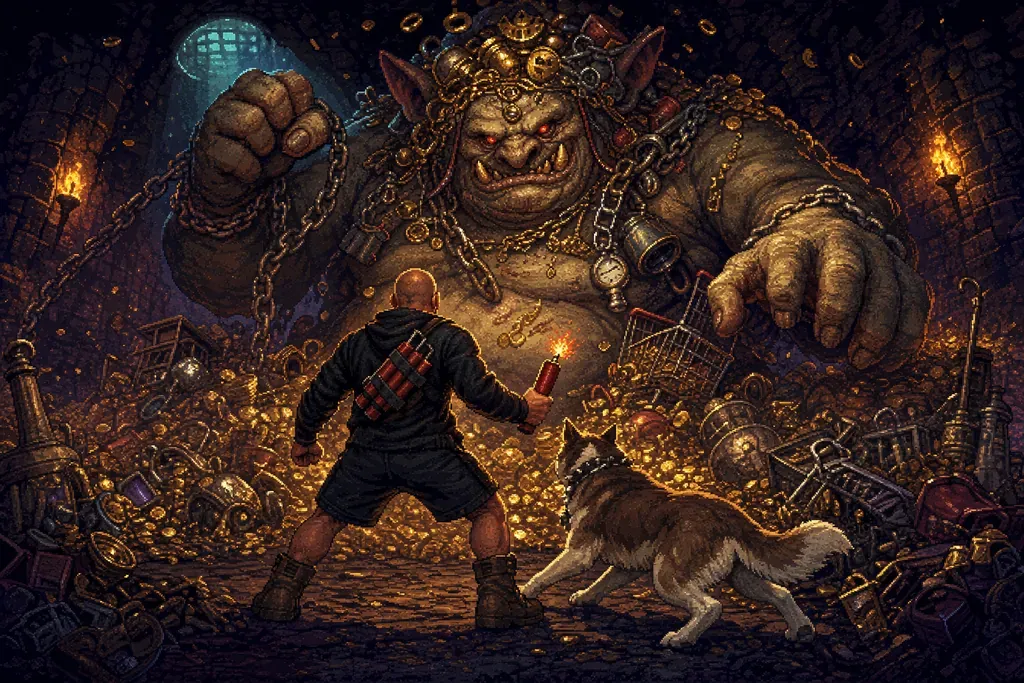
The first playtest went great. The narrator described the fight, the killing blow, the loot, and a nice piece of +1 AC gear. None of it had happened. No dice had been rolled and nothing in the save had changed. Claude Haiku had done what a language model does when you ask it to run a game: it told a story about one.
I had made this mistake before, on a bigger budget.
The dice roll in WAP
In November 2025 I was building WAP, a web-app prototyping hub with shared accounts, a small economy and a Discord-style layout where every game was a server and every place inside it was a channel. Two days after the first commit I added a dice mechanic "with D&D-style features". The next day brought Yahtzee, chess, and a narrative scenario system with skill checks. The game master could create entities, stats and currencies on the fly. By November 30 the game-master agents could call mechanics as tools, and just before Christmas there were design docs for text-based games and streaming narration. After that came maps.
The platform kept growing. The assumption at its center never got looked at. The game master was the model. It wrote the scenario, picked the skill check, set the difficulty and judged the result, all in one breath, in a mix of prose and commands the UI parsed out of its reply.
It was a great storyteller and a terrible referee.
Twenty-eight minutes as Dungeon Crawler Luke
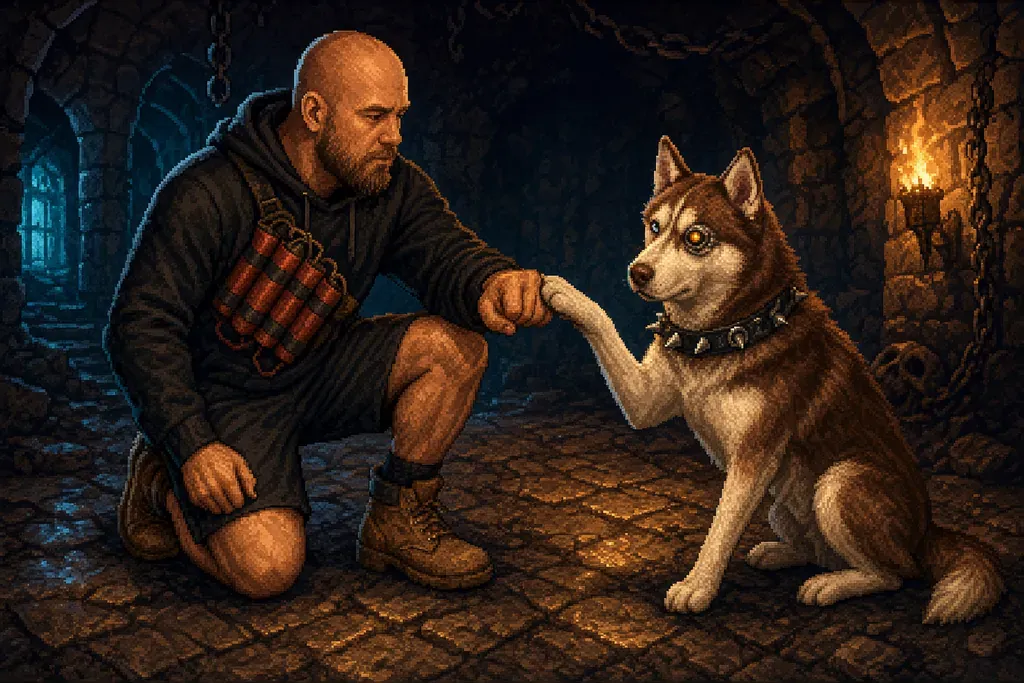
The idea came back this September as an easter egg on this site. CY-Bear, my husky reimagined as a chat companion, got an adventure mode behind a door in her chat window. The first commit landed at 6:44 on the evening of September 22 under the name Dungeon Crawler Luke. Twenty-eight minutes later it was Den Crawler Bear, and the show was hers. It's a D&D-rules crawl and an open, affectionate riff on Dungeon Crawler Carl. I'm the Carl. She's the Donut.
The model narrates. The code decides.
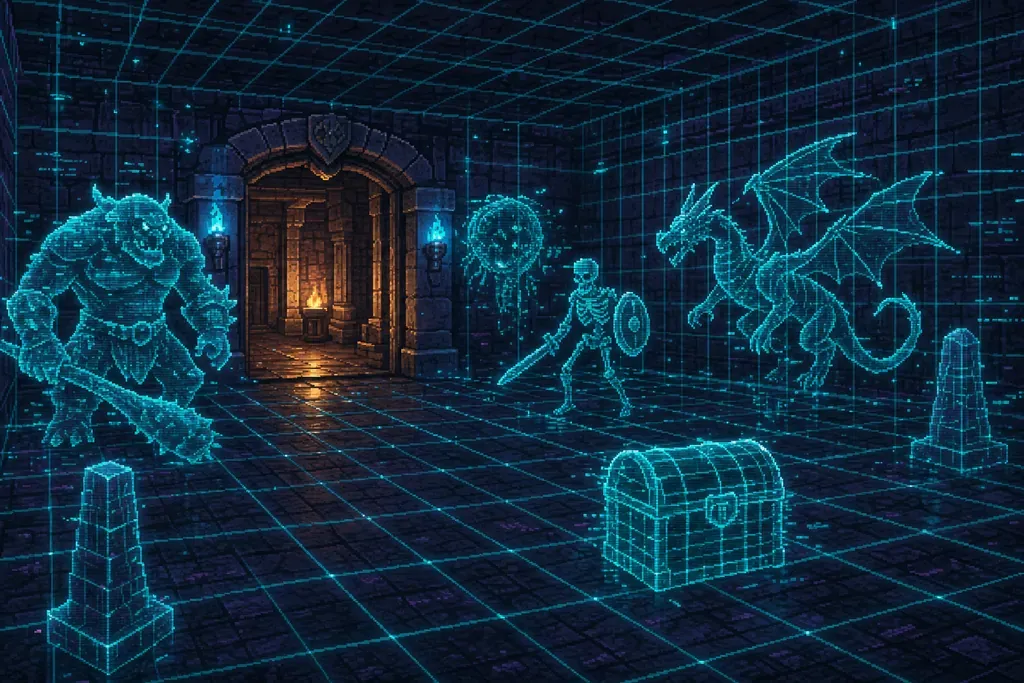
Then the playtest above happened, and the fix was the one WAP never got. Every turn is now two calls. The first, Decide, is forced to use tools and nothing else: ability check, start combat, combat round, advance room, award loot box. Those tools run against a rules engine written as plain functions with an injectable random-number generator, so every roll is real and every roll is testable. The second call, Narrate, has tools switched off and streams prose about what the first call established. It can describe the crit. It cannot cause one.
The engine also says no. The boss is locked until room seven. Fights cap at three enemies. One loot box per turn. Typing "open box" never reaches the model; the page intercepts it and opens the box from the HUD. There is no "next room" button, because the server refuses to advance until something has actually happened in the room, and the prompt tells the narrator to interrupt anyone who tries to rush past an empty one.
Three days, six floors
With the split in place the rest came fast: 97 commits tagged crawl between September 22 and 24. A registration terminal with 32 pre-made portraits, or a generated one if you'd rather be painted (about a cent, about fifteen seconds). Pixel-art unit frames. A holographic System AI with its own briefing room. Boss cinematics. Six floors, each riffing on a classic the way the books do: the Den, then a mall after hours (Pac-Man), a long haul (Oregon Trail), a last train (Among Us), a pet expo (Tamagotchi) and a season finale (Smash TV). A Season 1 arc called "The Eye" runs through all of them.
Other real players show up too. About a third of the time you're exploring, the server offers the narrator one or two crawlers from the Hall of Crawlers as cameos. It can only bring them in through a tool, with their portrait on a CRAWLER SIGHTED card, and it's forbidden from claiming anything about the actual person. Their personalities are invented. Same rule as the dice: the model gets the voice, never the facts.
Because the rules are pure functions, I balanced floor one by simulation instead of by feel: 2,000 to 3,000 runs per class with a naive always-attack player. Fighters die about 6.5% of the time, rogues 7%, wizards 8%, clerics 12.6% after I buffed Sacred Flame to 2d6. Real narrators mix in traps and rests, so it plays easier than that.
Petitions to management
Players don't file bugs. They file petitions, in character, from a rail button, by texting the System AI, or by complaining out loud in the story. Each one becomes a real GitHub issue with the last 25 turns attached as a session trace, so I can replay exactly what went wrong. Filing pays 250 viewers. When the fix ships, the crawler who reported it is credited in the in-game patch notes and gets a gold box. Luke also texts them about it, which is a short Haiku call pretending to be me.
The patch notes caused their own outage. One unescaped apostrophe in an entry took /api/crawl down on September 24. Content is code.
What carried over
More of WAP survived than I expected: the narrator persona, skill checks against a difficulty number, choice chips, generated art for every scene. What didn't survive was the model as referee. Opus was about five times the cost of Haiku for the same job. Gemini Flash-Lite broke the formats. Haiku 4.5, with tools it can't refuse and dice it can't touch, costs half a cent to a cent per turn and has no way to invent a kill.
The narrator still gets the best lines. It just doesn't get to touch the dice.
Den Crawler Bear is a shameless, loving riff on Dungeon Crawler Carl by Matt Dinniman. We borrow the premise, never the prose. Go read the books.